
Most dentists want a clear number before they hire anyone. The truth is that local dental SEO costs range from a few hundred dollars to a few thousand dollars each month, and the right price depends on your city, your goals, and your current website. This guide breaks down real price ranges, explains what drives them, and shows what you get for your money. You will also learn how to spot a fair quote so you can plan your budget with confidence. All prices below come from typical market ranges, so use them as a guide and not as a fixed rule.
Want a price that fits your practice? Request a free audit today and get clear numbers.
What Is the Average Monthly Cost of Dental SEO?
Most small practices in the United States pay between $500 and $1,500 per month for a solid local search plan. Larger practices in busy cities often pay $2,000 to $5,000 or more because more rivals fight for the same patients. A price below $300 a month usually means a short task list and little real work.
Think of the price as a match to your size and your market. One dentist’s office in a small town needs less work than a five-office group in Dallas. The table below shows typical ranges.
| Practice Type | Typical Monthly Cost | Common Focus |
|---|---|---|
| Single dentist office | $500 to $1,200 | Google Business Profile, citations, service pages |
| Mid-size practice with 2 to 5 dentists | $1,200 to $2,500 | Service pages, blog posts, review requests, links |
| Multi-location group or DSO | $2,500 to $5,000+ | Location pages, content plans, reports for each office |
What Factors Change the Price of Local SEO?
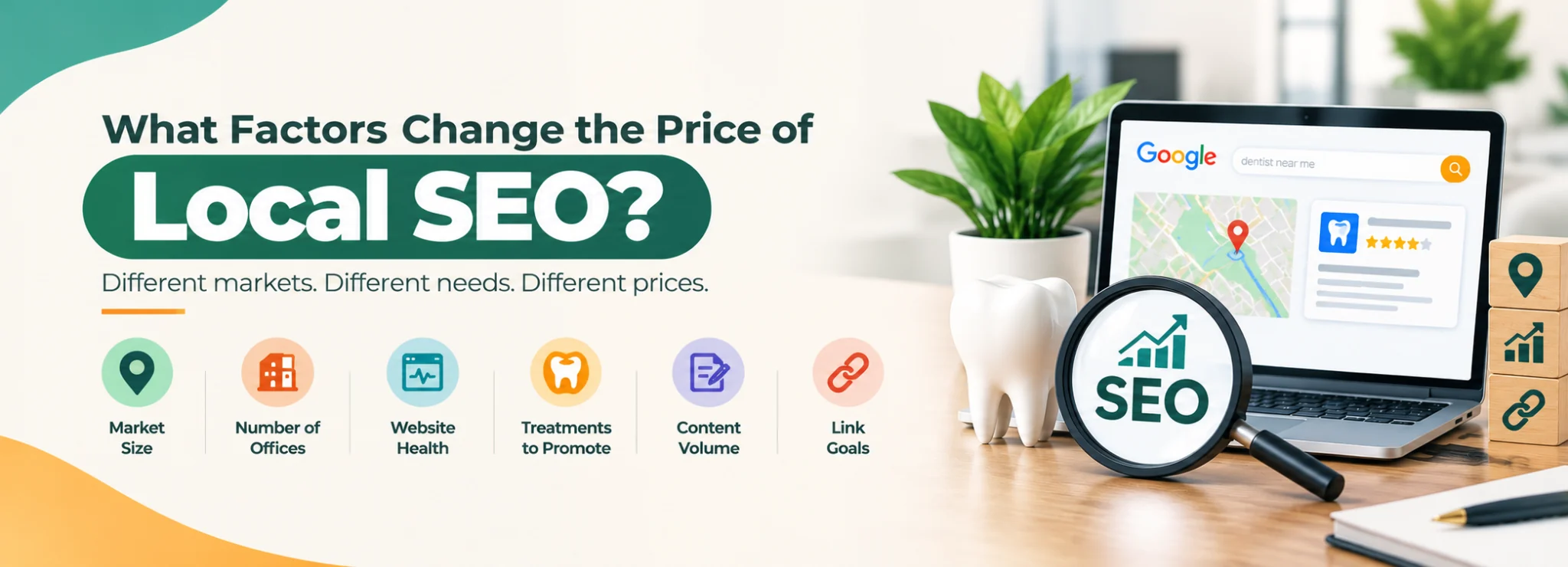
Every quote is different because every market is different. These factors move the price the most:
- Market size: Big cities cost more because rivals spend more.
- Number of offices: Each office needs its own pages and profile.
- Website health: A slow or broken site needs repair first.
- Treatments you want to promote: Implants and Invisalign face more rivals than cleanings.
- Content volume: More pages and blog posts raise the monthly fee.
- Link goals: Strong links from trusted sites take time and money.
- Speed of results: Faster goals need more work each month.
Ask each provider which of these factors it counted in your quote.
Does Your City Change the Price of Local SEO?
Yes, and more than most dentists expect. A practice in Chicago or Los Angeles faces hundreds of rivals for the same search terms, so a provider must do more work to win a spot on the map. A practice in a small town may rank with a lighter plan because fewer offices compete for the same patients.
Check the search results for your top treatment in your own city. If the same five offices show up with strong reviews and long service pages, expect a higher budget. If the results look thin, a smaller plan may work well and cost you less. Also compare your city with nearby towns, since a short drive can change the price range.
How Much Does a Dental Local SEO Marketing Agency Charge Each Month?
A full-service agency usually charges $1,000 to $4,000 per month. That fee pays for a strategist, a writer, a technical expert, and a report each month. A freelancer may charge $400 to $1,200, but one person handles every task, so results may come slower.
An in-house hire costs the most. A full-time marketer earns a salary, plus benefits, plus tools, so the true yearly cost often passes the price of a good agency. Most dental offices choose an agency or a strong freelancer for that reason. Compare each cost before you decide who to hire.
How Much Should You Expect to Pay in the First Three Months?
The first three months often cost more than the months that follow. The provider must audit your site, fix your profile, clean up your citations, and write the first round of service pages. Some offices charge a one-time setup fee of $500 to $2,000 for this work, while others spread the cost over the first few invoices.
After that base is set, the monthly work shifts to new content, review requests, links, and reports. Ask your provider to show what changes between month one and month four so the fee feels fair at every stage.
What Hidden Costs Can Raise Your Total Bill?
Some costs sit outside the monthly fee. Call trackers, paid link tools, custom photos, and extra reports can each add $50 to $300 per month. A few providers pass these costs to you at the end of the month without notice.
Ask which tools the fee covers and which tools you must pay for yourself. A clear provider lists every extra cost in the first quote, so no surprise shows up on your invoice.
Do Reviews and Reputation Work Add to the Price?
Reviews help your rank and your trust, so many plans add a review tool. Basic review request tools cost $50 to $200 per month, and full reputation care with replies and alerts can cost $300 to $800. Some plans already include a simple version, so check your quote first.
You can also ask patients for reviews on your own. A short text after each visit, with a direct link, often works well. Answer every review in a kind and short tone, since patients read those replies before they call.
What Does a Local SEO for Dentist Plan Include?
A strong local SEO for a dentist plan covers the tasks that put your office on the map and bring in calls. Here are the core parts:
- Google Business Profile setup and weekly posts
- Local citations that match your name, address, and phone number
- Service pages for each treatment and each city you serve
- Review requests that help you earn more five-star ratings
- Monthly reports with calls, clicks, and new patient counts
If a quote skips most of these items, ask why. A cheap plan often leaves out the pages and links that move your rank the most.
Do You Need Local Dental SEO Experts for Your Practice?
Not every practice needs a large team. If you have time to update your Google Business Profile, write pages, and read reports each week, you can start small on your own. Most busy dentists do not have that time, and one mistake on a profile or a website can push your office down the map results.
Local dental SEO experts know which fixes matter first, so you pay for results instead of guesses. They also know how Google reads dental pages, which saves you months of trial and error. Experts spot errors early, like a wrong phone number or a dead page, that can cost you calls each week. That skill is the main reason a good provider can be worth the fee.
What Contract Terms and Fees Should You Watch For?
Ask every dental local SEO marketing agency for a written scope before you sign. The scope should list each task, each fee, and the date of each report. Watch for setup fees, ad spend, and extra charges for content, since these can raise your first bill.
Month-to-month terms give you the most freedom. Some providers, such as Dentist SEO Experts, scope each quote around your market and skip long-term lock-in contracts. That kind of openness is what you should look for from any provider.
Not sure what a fair quote looks like? Book a free call and compare your offer with real ranges.
What Do Dentist SEO Services Cost by Task?
Some offices pay by task instead of a full plan. This path works well if you only need a fix or a boost, and it lets you test dentist SEO services before you commit to a larger plan. Use the table below to compare common prices.
| Task | Typical Price | How Often |
|---|---|---|
| Website and profile audit | $300 to $1,000 | One time |
| Google Business Profile management | $150 to $500 | Monthly |
| Service page copy | $100 to $300 per page | As needed |
| Blog post | $100 to $250 per post | Monthly |
| Local link outreach | $300 to $1,000 | Monthly |
| Review request setup | $100 to $300 | Monthly |
Add the tasks together and compare the total to a full plan. A bundle often costs less than the same tasks if you buy them one by one. Task prices also help you spread the spend when cash is tight.
Does Dental Social Media Raise the Cost?
Dental Social Media is a common add-on, and it usually costs $300 to $1,000 per month. That fee covers posts, short videos, and replies on Facebook, Instagram, and TikTok. It does not raise your Google rank by itself, but it builds trust before a patient calls your office.
Start with local search first, since it brings ready-to-book patients from Google. Add social posts later when your budget grows and you want more brand reach. Keep the posts friendly, local, and simple.
Should You Pay for Ads Instead of SEO?
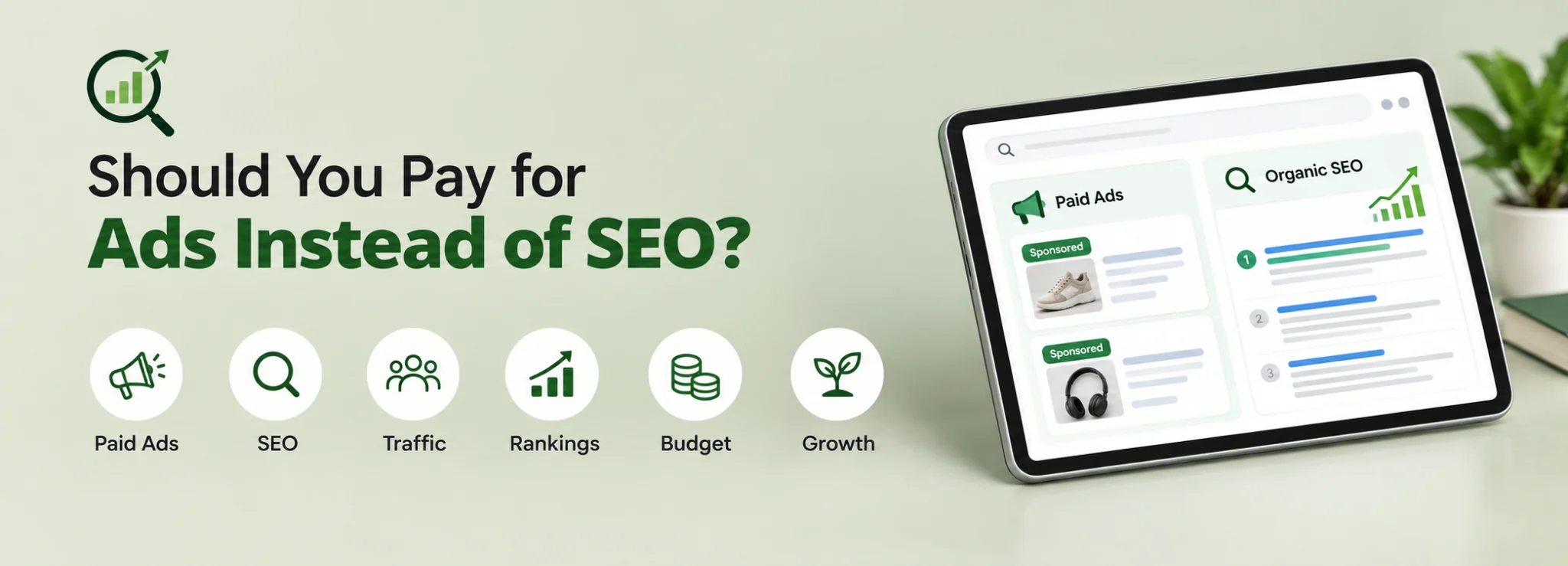
Ads bring fast traffic, but the traffic ends the day your ad budget ends. Dental terms like implants and Invisalign can cost several dollars or more for each click, and not every click turns into a call. Ads work well for a quick launch or a special offer.
SEO takes more time, but it builds an asset that sends new patients your way month after month. Many practices use both, with ads for fast leads and local search for steady growth. Track the cost per new patient for each channel. If your budget allows only one, pick SEO for the long run.
Is Cheap Local SEO Worth the Risk?
A low price can look great on paper, but it often hides weak work. Plans under $300 per month rarely include real content, real links, or clear reports. Some cheap providers send bulk links from spam sites, and Google may punish your website for that.
Be careful with anyone who promises a number one rank in a few weeks. Google itself says no one can guarantee a rank. A fair provider offers a clear process, honest timelines, and monthly proof of progress. Cheap quotes rarely include all three.
Does a New Website Add to the Cost?
Sometimes it does. If your site loads slowly, breaks on phones, or hides your treatment pages, local search work will not go far. A new dental website can cost several thousand dollars, which is a one-time cost on top of the monthly fee.
Ask for a site check before you agree to a rebuild. Many sites need only a few fixes, like faster images, cleaner page titles, and better menus. Fix the weak parts first and rebuild only when the site cannot hold up.
Can a Small Practice Get Good Results on a Low Budget?

Yes, if you focus on the tasks that matter most. Start with a fully filled-out Google Business Profile, accurate citations, and one strong page for each top treatment. These steps cost less than a full plan and often show gains in the map results first.
Then add one new page or blog post each month as cash flow allows. Ask your patients for reviews after each visit, since reviews cost nothing and help your rank. A small plan with steady work beats a large plan that stops after two months.
What Should You Ask a Provider Before You Hire?
Good questions protect your budget. Ask who will do the work, how often you will get reports, and which numbers the reports will show. Ask for two or three dental clients with results you can check, such as more calls or more map views.
Also ask what happens if results stall. A solid provider explains the next steps and does not blame Google. Write down every answer and compare the notes from each provider side by side.
How Can You Set a Smart SEO Budget for Your Practice?
Start with your goal. Decide how many new patients you want each month, then check what an average new patient is worth to your office. A cleaning patient may bring a few hundred dollars per year, while an implant or Invisalign case can bring several thousand.
Next, set aside a share of your monthly revenue for growth and split it between SEO and other channels. Review the plan at month three and month six, and raise or lower the spend based on calls and booked visits. This ties your spending closely to real results. Write your goal down so you can compare every quote against the same target.
How Fast Will You See a Return on Your Spend?
Most practices see early gains within 2 to 3 months and stronger results from month 6 on. Local search works like a savings account. Each month adds to the last one, so patient calls grow while the cost per patient falls.
Run a simple test. If a new implant patient is worth $4,000 and your plan costs $1,500 per month, one new patient covers almost three months of the fee. Even a lower-value patient, such as a family that visits twice a year, adds up over time. Track calls and booked visits so you can see the real return.
Conclusion
The cost of local dental SEO depends on your market, your size, and the work you need. Most single offices spend $500 to $1,500 each month, while larger groups spend more. Compare full plans against single tasks, ask for a written scope, and give the plan at least six months. Dentist SEO Experts notes that first rank gains often show within 2 to 3 months, so patience matters. Small offices can start with the core tasks, and larger groups can add content, links, and social posts as they grow. Use the ranges in this guide to set a budget that fits your goals.
Ready to see your own numbers? Request a free audit and get a clear plan for your practice.
 10 years in dental SEO
I’m James Wilson, a dental SEO specialist with ten years of experience. I help dentists show up higher on Google, get found by patients in their area, and turn website visits into booked appointments. My work covers local SEO, keyword research, Google Business Profile optimization, and website content written for dental practices. I also share straightforward SEO tips that help dentists with everyday marketing problems, stand out from nearby competitors, and reach the patients who are searching for the care they offer.