
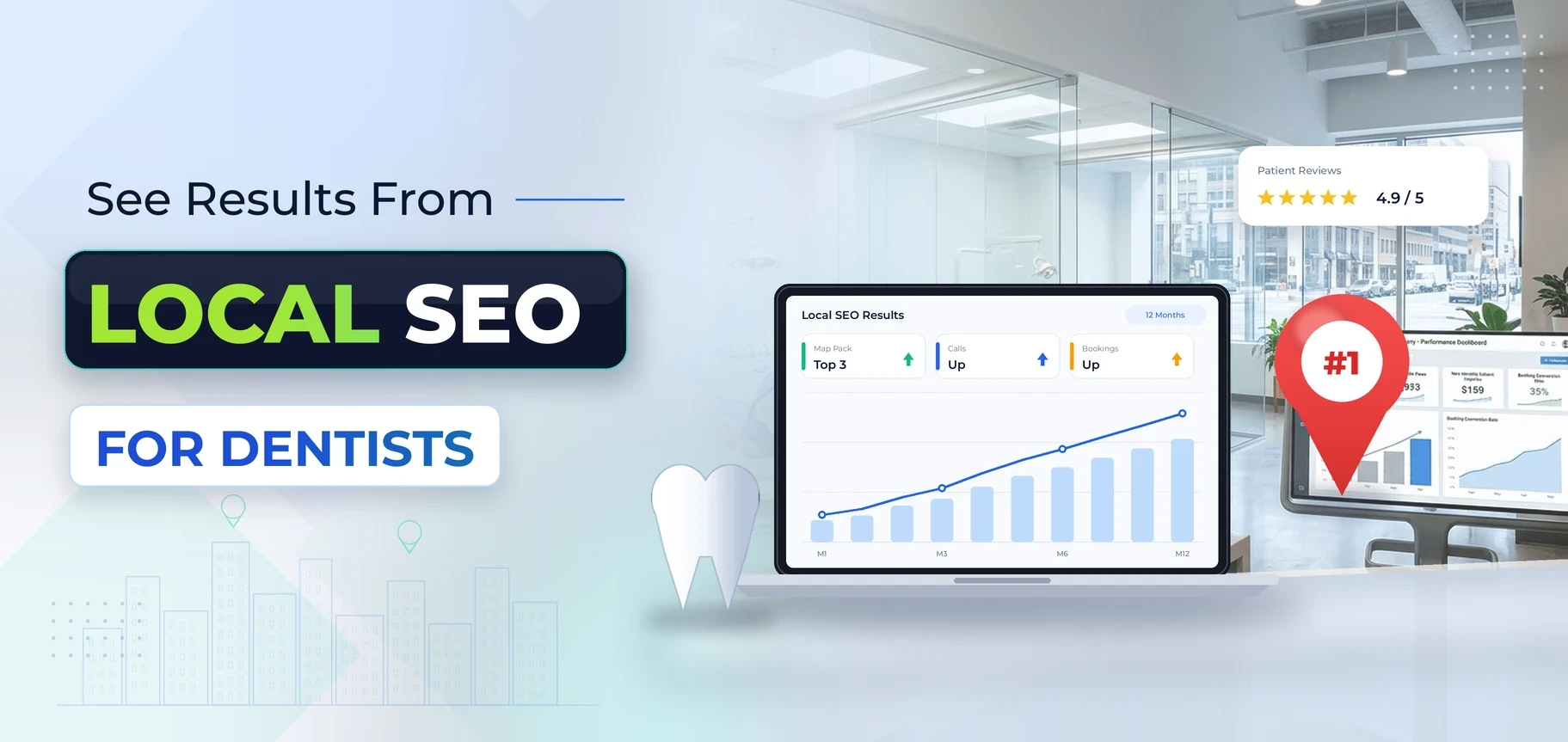
Short answer: Most dental practices see early signs from local SEO for dentists within one to three months. You may notice more Google Business Profile views and better rankings near your office. Real gains in Google Maps, phone calls, and new patients usually show up between three and six months. Competitive cities and big treatments like implants and Invisalign often need six to twelve months or more. Nobody can promise an exact date, because your results depend on your competitors, where you begin, and how steady the work stays.
That answer is true, but it does not help much on its own. If you run a practice, you want to know what happens each month, what progress looks like before the phone rings, and how to tell if your campaign works. This guide covers all of it.
Key Takeaways
- Local SEO usually shows early signs in 1 to 3 months and real results in 3 to 6 months. Competitive markets take 6 to 12 months or more.
- Your Google Maps rankings tend to improve near your office first, then reach farther out as your profile earns trust.
- Calls and direction requests from your Google Business Profile often rise before your website traffic does.
- Competition, review count, profile accuracy, and website quality shape your timeline more than anything else.
- Any agency that promises a set ranking by a set date is promising something it cannot control.
Find Out Where Your Practice Stands Today
A free audit shows your current rankings, the gaps that hold you back, and a realistic timeline for your market.
What Google Says About SEO Timelines
Google’s own guidance gives you a good reality check. On its page about whether you need an SEO, Google says most changes need four months to a year before they show real benefit. That range fits every kind of business, and it matches what most dental practices see.
Local search adds one more rule. Google ranks local results by relevance, distance, and prominence. You can improve relevance and prominence. You cannot change distance. So a practice usually ranks first for patients who live near the office, and it takes longer to win searches across the whole city.
A Realistic Local SEO Timeline for Dental Practices
Every market is different, but most campaigns follow the same pattern. Use this table as a guide, not a promise.
| Timeframe | What usually happens | What you may notice |
|---|---|---|
| Weeks 1 to 4 | Audit, Google Business Profile fixes, tracking setup, and the start of listing cleanup | Few visible ranking changes. Profile views may rise once the profile is fixed and complete. |
| Months 1 to 3 | Service page updates, review requests, fixed listings, and the first new content | Early movement for searches near your office and for easier terms. More calls and direction requests from your profile. |
| Months 3 to 6 | Reviews and content keep growing, and local links start to arrive | Your Map Pack presence reaches farther from your office. Website traffic and calls start to climb. |
| Months 6 to 12 | Trust adds up, and the work shifts to harder treatments | Steadier Map Pack spots for your main searches and clear new patient growth in many markets. |
| 12 months and beyond | Regular updates, new content, and new services or areas | Hard terms like implants or Invisalign in larger cities become realistic goals. |
Weeks 1 to 4: Fix the Foundation
The first month is setup work. A good team starts by checking your Google Business Profile, your website, your reviews, and your listings on other sites. They fix the big problems first: the wrong main category, missing services, phone numbers that do not match, and duplicate listings. These problems hold back everything else.
Call tracking and analytics go in during this month too. Without them, you cannot prove later that SEO brought in patients.
Months 1 to 3: Early Signals
This is when the first changes show up. A fixed and complete profile often gets more views and more actions, such as calls, website clicks, and direction requests. Rankings for searches close to your office may improve, especially for easier terms like “dentist open Saturday” or “dental cleaning near me.”
Your website moves slower. Google needs time to find, read, and trust new or updated service pages.
Months 3 to 6: Visible Momentum
For many practices, this is when SEO starts to feel real. Your reviews have grown, your listings match, and your service pages have settled in. Your Map Pack presence usually reaches past the immediate neighborhood, and you can measure the rise in calls from search.
Months 6 to 12: Results Add Up
Local SEO builds on itself. Every new review, page, and local link adds to the ones before it. Practices in moderately competitive markets often hold steady Map Pack spots for their main searches by this point. They also see a clear jump in new patient calls from search.
Beyond 12 Months: Win the Hardest Searches
Searches like “dental implants near me” or “Invisalign dentist” in a big city can take a year or more. The practices that already rank have years of reviews and content behind them. The good news is that rankings you earn this way last. Paid ads stop the day your budget stops.
How Long Each Type of Result Usually Takes
“Results” means different things to different practices. This table shows how the main goals compare.
| Goal | First signs | Real change |
|---|---|---|
| Map Pack rankings near your office | 4 to 8 weeks | 3 to 6 months |
| Map Pack rankings across your service area | 2 to 4 months | 6 to 12 months |
| Organic rankings for treatment pages | 2 to 4 months | 6 to 12 months |
| Calls and direction requests from your profile | 1 to 3 months | 4 to 8 months |
| New patients you can trace to SEO | 3 to 4 months | 6 to 12 months |
These are typical ranges, not guarantees. A practice with a strong profile in a small town may move faster. A new practice in a crowded city may move slower.
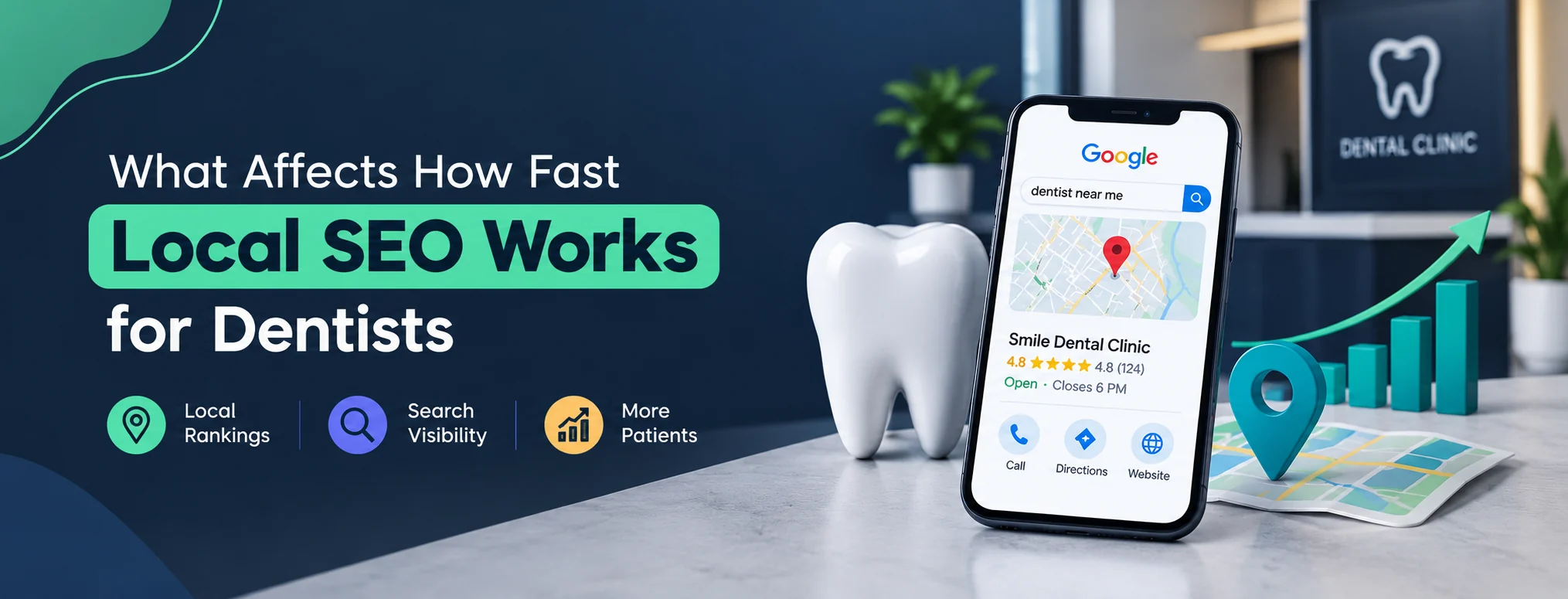
What Affects How Fast Local SEO Works for Dentists
1. Competition in Your Market
This is the biggest factor. A practice that competes with five dentists in a small town will usually see results much sooner than one that competes with fifty in a dense city. Corporate dental groups with large marketing budgets raise the bar even higher.
2. Where You Begin
An established practice with years of reviews and an older website already has trust to build on. A new practice starts from zero. It has to earn trust before it can rank, even if every technical detail is right.
3. Your Google Business Profile
Accurate categories, a full list of services, real photos, correct hours, and regular updates all matter. A new profile, an address change, or a re-check by Google can pause your progress for a while. A suspended profile can set you back weeks. Follow Google’s rules, and never add keywords to your business name.
4. Reviews
Google looks at how many reviews you have, your star rating, and how recent your reviews are. Patients read them closely too. As we explain in our guide on how to hire a local SEO expert for dentists, a steady flow of fresh reviews beats a big burst that fades. A simple review request routine is one of the most reliable ways to speed up local results.
5. Website Quality
Your website backs up your profile. Give each treatment its own page. Show your location clearly. Make the site load fast on phones. Make it easy to call or book. All of this helps Google and patients understand what you offer and where.
6. Matching Listings
Your practice name, address, and phone number should look the same everywhere they appear online. Old addresses or different phone numbers on other sites send mixed signals and slow everything down.
7. The Treatments You Want to Rank For
Searches for general dentistry come often and face less competition. High value treatments draw more competitors. That is why we build separate plans for general and family practices, implant and cosmetic practices, and orthodontists.
8. How Fast You Approve Changes
An SEO plan only works when someone carries it out. Slow approvals on content, slow website access, or slow review requests push your whole timeline back.
9. Past Problems
Duplicate listings, an old penalty, a poor website move, or spam links from a past agency all add cleanup time before real growth starts. If your rankings dropped suddenly, read how our SEO recovery service handles it.
Want a Timeline for Your Market?
We will study your competition and your current profile, then give you an honest estimate of what to expect.
How to Tell If Local SEO Is Working Before Patients Arrive
Rankings and new patients change last. While you wait for them, these early signs show whether your campaign is on track:
- Google Business Profile activity: more people see your profile, call you, click to your website, and ask for directions.
- Local ranking grids: a map based report that shows your visibility reach farther from your office over time.
- Impressions in Google Search Console: your pages show up in more searches, even before clicks rise.
- Review growth: a steady monthly rise in new reviews.
- Tracked calls and form fills: the clearest link between SEO and new patients.
A good monthly report puts these numbers side by side, so you can see the trend instead of guessing.
What You Can Do to Get Results Sooner
- Fill out your Google Business Profile completely. Pick an accurate main category, add every service, upload real photos, and keep your hours current, including holidays.
- Ask every happy patient for a review. Make it part of checkout. Reply to reviews without sharing any patient health details.
- Build a page for each core treatment. One general “services” page cannot rank for cleanings, crowns, implants, and Invisalign at the same time.
- Fix your listings. Make your name, address, and phone number match everywhere.
- Answer your phone. SEO can bring calls, but missed calls lose patients. Track how many calls go unanswered.
- Stay consistent. Quit after two or three months, and you quit right before results start to add up.
Warning Signs to Watch For
Some shortcuts promise faster results but put you at risk later:
- A promise of a number one ranking by a set date
- Keywords like “Best Dentist” added to your business name on Google
- Fake or bought reviews
- Large batches of low quality links
- Reports that show rankings but never show calls or patients
Any of these can get your profile suspended or cost you rankings. That costs far more time than doing the work right from day one.
What About AI Search?
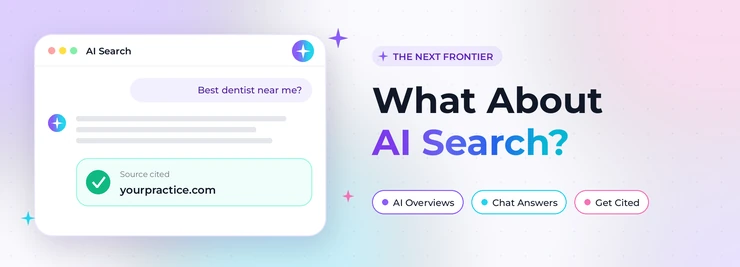
More patients now ask ChatGPT, Gemini, Google AI Overviews, and Perplexity to recommend a dentist. These tools tend to lean on the same things local SEO does: accurate business details, strong reviews, and clear answers to common questions. As we cover in Are You Missing Patients From AI Search?, practices with consistent details and helpful content are more likely to get a mention.
No one can guarantee or time your visibility in AI answers. Still, the same work that lifts your local rankings also raises your odds of getting named. Our AI dental SEO service builds on that base.
Three Example Scenarios
These examples show how timelines differ. They are not real client results.
An established practice in a small town: The practice has good reviews, but its profile is incomplete and uses the wrong category. Once the team fixes the profile and starts a review routine, the practice may see more calls within two months, because the base was already strong.
A new practice in a growing suburb: The practice has no reviews and a new website. The first months go to earning reviews and writing service pages. Real Map Pack visibility may take six to nine months, with steady growth after that.
An implant practice in a large city: Dozens of competitors already rank for implant searches. The practice may win easier searches within a few months, such as a specific procedure or a nearby neighborhood. Ranking for “dental implants near me” across the whole city could take a year or more.
When to Reassess Your Local SEO
At about 90 days, check the early signs. Profile actions, impressions, and review growth should all move the right way. At six months, you should see a clear rise in calls or appointment requests from search. If nothing has changed by then, ask your provider what blocks progress and what they plan to change.
The Bottom Line
Local SEO for dentists is a medium-term investment. Expect early signs in the first few months, real results at three to six months, and stronger, longer-lasting growth from six to twelve months and beyond. The practices that win fix their foundation early, keep earning reviews, and stay consistent.
If you want a realistic picture for your own practice, our local dental SEO team can review your market and show you what to expect. You can also start with a free dental SEO audit.
Ready to Get Found by Local Patients?
A short call shows where your practice stands and what to fix first.
 10 years in dental SEO
I’m James Wilson, a dental SEO specialist with ten years of experience. I help dentists show up higher on Google, get found by patients in their area, and turn website visits into booked appointments. My work covers local SEO, keyword research, Google Business Profile optimization, and website content written for dental practices. I also share straightforward SEO tips that help dentists with everyday marketing problems, stand out from nearby competitors, and reach the patients who are searching for the care they offer.