
Short answer: Google Ads gets you new patients fast, but only as long as you pay for the clicks. Dental SEO takes more time. In return, it usually costs less per patient down the road, because the work you pay for stays on Google. Your positions, reviews, and web pages don’t vanish when the invoice is paid. Most practices do best when SEO is the base, and ads fill the gaps.
Need to pick between dental SEO vs. Google Ads? Start with two questions. How fast do you need new patients? And how long can you wait? Below, we compare the two on speed, cost, control, and risk, so you know where your next dollar should go. If you want to see what an SEO program covers first, look at our dental SEO services.
In This Article
Key Takeaways
- Google Ads can bring calls in a few days. When the budget ends, so do the calls.
- Dental SEO is slow at first. Then it grows into a steady source of new patients that you don’t pay for by the click.
- Look at the cost per booked new patient, not the cost per click. It tells you the truth.
- Ads fit new offices, urgent needs, and big treatments. SEO fits steady, long-term growth.
- Track every call and every booked appointment. Without that, you can only guess which channel works.
Not Sure Where Your Budget Should Go?
Get a free dental SEO audit. It shows how easily patients find your practice today and where you can win fastest.
How Dental SEO and Google Ads Actually Work
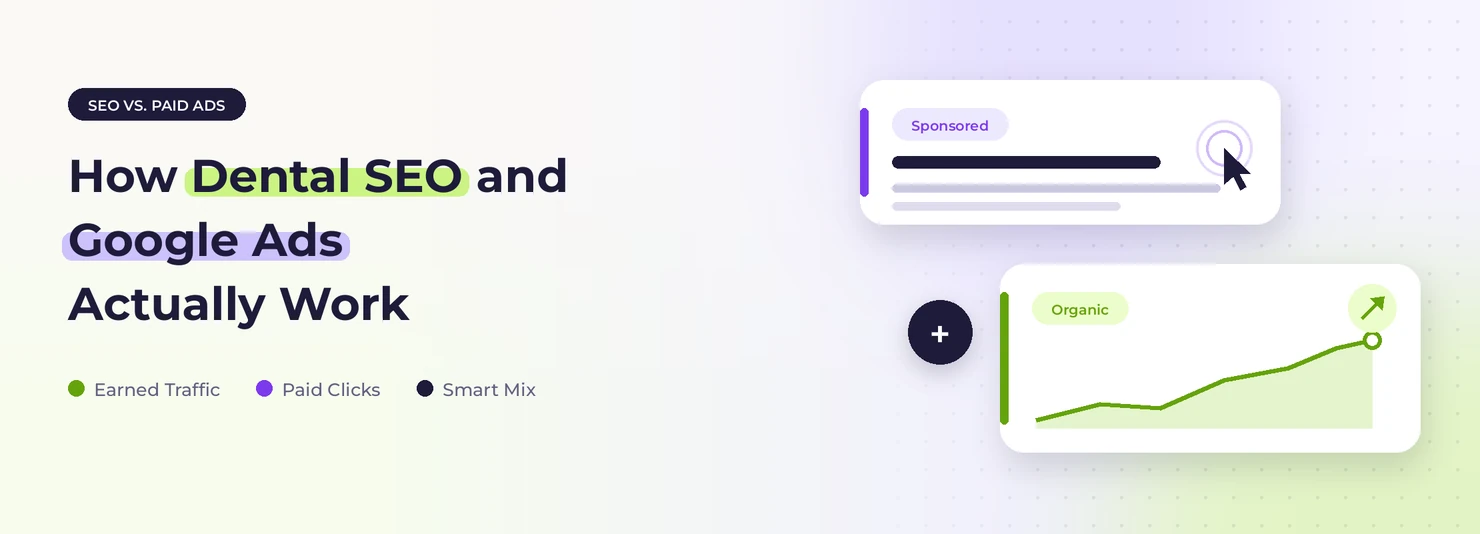
Patients type something like “dentist near me” or “emergency dentist open today”. Both channels try to put your practice in front of that person. They just take different roads.
Google Ads: You Pay for the Click
With pay-per-click (PPC) ads, you bid on keywords. Your ad then shows above or below the normal search results. Every click costs you money, whether the person books or not. Ads start fast and stop fast.
Dental SEO: You Earn the Position
Dental SEO is the work that helps Google rank your practice. It covers your website, your Google Business Profile, your reviews and your local citations (your name, address and phone number on other sites). Google doesn’t charge you per click. You pay for the work that moves you up in the map results and the regular listings.
Most new patient searches are won locally. Google explains how local results are ordered in its Business Profile help article. It boils down to three things: relevance, distance and prominence. Our guide to local dental SEO breaks down each one.
Tip: Pull out your phone and search your top service plus your city. Count the ads above the map. You’ll see how crowded the paid side is before you spend a dollar.
Speed, Cost and Staying Power Compared
Here’s how the two stack up side by side.
| Factor | Google Ads | Dental SEO |
|---|---|---|
| Time to first leads | A few days to a few weeks | Often several months |
| Monthly cost | Ad spend plus management fees, every month | A service fee. Results last longer than the fee |
| Stops when payments stop | Yes, right away | No. Positions fade slowly if you ignore them |
| Control over placement | High. You pick the keywords and the budget | Medium. You can influence it, but you can’t control it |
| Best for | New offices, special offers, high-value treatments | Steady new patients, trust and reputation |
| Main risk | Wasted clicks from bad keywords or no call data | A slow start and reports that don’t say much |
How Patients Behave in Each Channel
Picture a patient with a broken tooth. They want help now, so they tap the first result that looks open and nearby. Now take someone who needs implants or braces. They compare a few offices, read reviews and check more than one website.
The two searches call for different tools. Urgent searches reward ads and a strong map listing. Research searches reward helpful content, proof of results and a good reputation. That’s where SEO does most of its work.
Ads win on speed and control. SEO wins on staying power and trust. Plenty of patients skip the sponsored results and pick the practice with a strong profile and lots of recent reviews.
Not sure how long SEO takes? Read how long local SEO takes for dentists before you set goals with your team.
What Does Each Channel Cost Per New Patient?
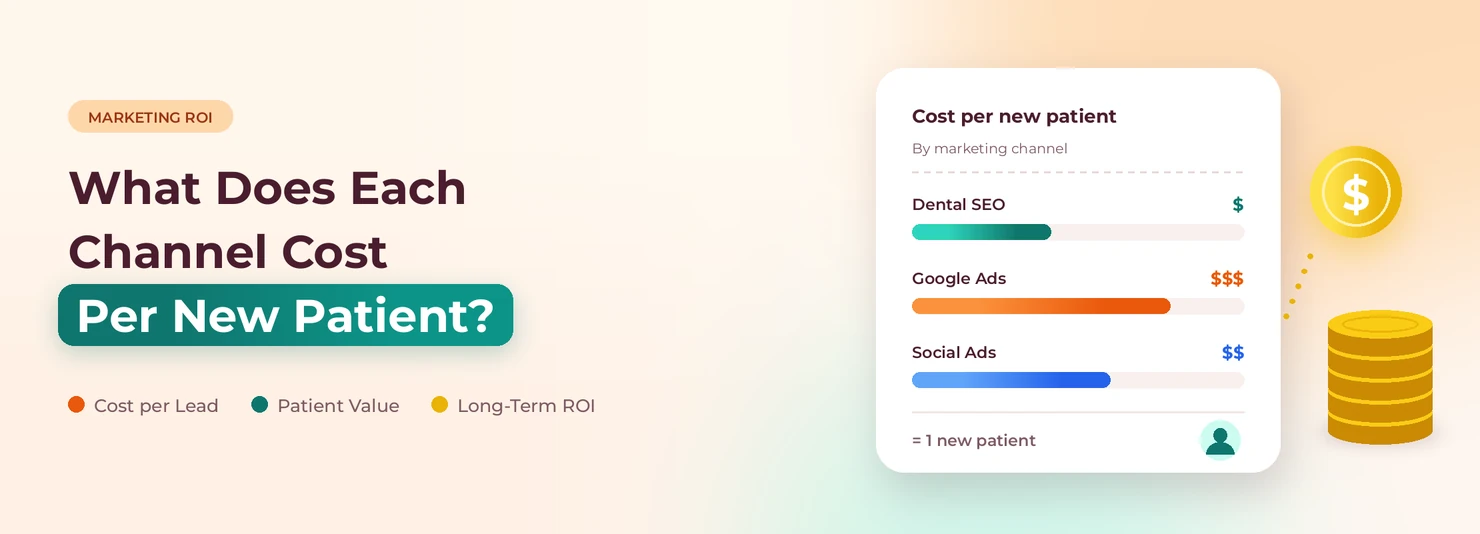
Real numbers are hard to find. Most of the figures online come from agencies that sell these services. Take everything below as a rough range, not a promise.
What Ads Tend to Cost
Industry price guides put dental clicks at about $4 to $15 for general terms. Implants, Invisalign and emergency searches cost a lot more. The cost per new patient is often quoted at $70 to $150 for routine care, and several times that for high-value treatment. A badly built campaign can cost far more.
What SEO Tends to Cost
SEO is usually a monthly service fee, not a charge per click. So your cost per patient drops as your positions improve. The first few months can feel pricey, because the work comes before the results. Our post on affordable local SEO packages for dentists shows what a fair price looks like for a small office.
Why Cost Per Click Misleads You
A cheap click that never calls is worse than an expensive click that books an implant consult. So judge each channel by the cost per booked new patient. Then look at the lifetime value of that patient. If you only track clicks, you can’t tell which channel works.
Tip: Ask your front desk to write down how each new patient found you. Then compare that list to your call records. Patients often say “Google” for both ads and maps, so the two lists help check each other.
See What Your Visibility Is Worth
Our free audit shows where your practice ranks today and which fixes could bring in the most patients.
When Google Ads Is the Smarter First Move
Pick ads when you can’t wait for SEO to kick in. Paid search makes sense in these cases:
- You just opened a new location and have no reviews or positions yet.
- You want to promote one service, like Invisalign consults or implant seminars.
- You have empty chairs this month and need appointments fast.
- Competitors already own the organic results for a high-value keyword.
Keep Ad Quality High
Three habits separate profitable dental campaigns from wasteful ones:
- Add negative keywords so you don’t pay for searches like “dental school” or “dentist jobs.”
- Show your ads only in your real service area.
- Read your search terms report every month.
Google also offers local services ads to dentists in the United States. You pay per lead instead of per click, and Google has to verify your practice before the ads run. They aren’t offered everywhere, so check your area before you count on them.
Ads only pay off if the page after the click does its job. Send people to a focused service page with a visible phone number and an appointment form. Don’t send them to your homepage. Our dental website development service covers the page features that turn visitors into appointments.
When SEO Should Come First
Start with dental SEO if you plan to stay in your market for years and want new patients who don’t depend on a monthly ad budget.
It Builds Trust That Ads Can’t Buy
Good reviews, a complete profile and helpful pages show patients you can be trusted. People who compare offices read the reviews before they read any ad. Our guide on how to get more Google reviews shows you how to earn them the honest way.
It Lowers Your Dependence on Bidding Wars
When ad prices go up, an office that relies only on ads pays more for the same patients. An office that shows up in the map results doesn’t pay per click. Your Google Business Profile is usually the fastest place to start.
Before you sign with anyone, read Google’s own page on whether you need an SEO. You’ll find it in its Search Central documentation.
It Compounds Over Time
A service page that ranks this year can still bring in calls next year. Every new review, local mention and helpful article adds to the same base. That’s why offices that stay at it often see their cost per patient fall while ad costs stay flat or rise.
The catch is patience. You get less say over timing, and you can’t buy the top spot for next week. If you need that kind of control, pair SEO with a small paid campaign.
Tip: Fix your Business Profile categories, hours and services before you spend on either channel. A weak profile drags down both ads and organic results.
How to Run Both Without Wasting Budget
For many practices, the best plan uses both channels, in the right order. Here’s a simple way to do it:
- Set up a way to track calls and appointments, so every lead has a source.
- Fix the SEO basics first: your profile, reviews, location pages and site speed.
- Launch a small ad campaign for your highest-value services. Keep the keywords and locations tight.
- Check results every month. Move money to the channel with the lower cost per booked patient.
- As your organic positions grow, cut ad spend on keywords you now win for free.
A baseline dental SEO audit shows you what to fix first. Our dental SEO audit checklist walks you through each check.
Split the Budget by Goal
Think of SEO as your base and ads as a flexible layer on top. Put most of your effort into the part that keeps paying off. Use paid campaigns for one clear job, like a new hygienist’s open schedule or a seasonal offer. Give every campaign a start date, a goal and a review date. That way, ad spend doesn’t turn into a habit nobody questions.
Reports matter as much as budget. Ask whoever runs your ads and SEO to show calls, form submissions and booked appointments by source, not just impressions and clicks. If a report can’t tell you how many new patients each channel brought in, it can’t help you decide anything.
Two mistakes to avoid. Don’t judge SEO after one month. And don’t leave ads on without a monthly look at your search terms. Both channels reward steady attention.
Want a Plan That Uses Both Channels Well?
Talk with our team about a realistic mix for your market and budget.
The Bottom Line
Google Ads is the faster lever. Dental SEO is the lasting one. Need patients this month? Ads can help. Planning for the next few years? Put SEO first and use ads only where they pay off. Take a look at our dental SEO service to see how we do it.
 10 years in dental SEO
I’m James Wilson, a dental SEO specialist with ten years of experience. I help dentists show up higher on Google, get found by patients in their area, and turn website visits into booked appointments. My work covers local SEO, keyword research, Google Business Profile optimization, and website content written for dental practices. I also share straightforward SEO tips that help dentists with everyday marketing problems, stand out from nearby competitors, and reach the patients who are searching for the care they offer.